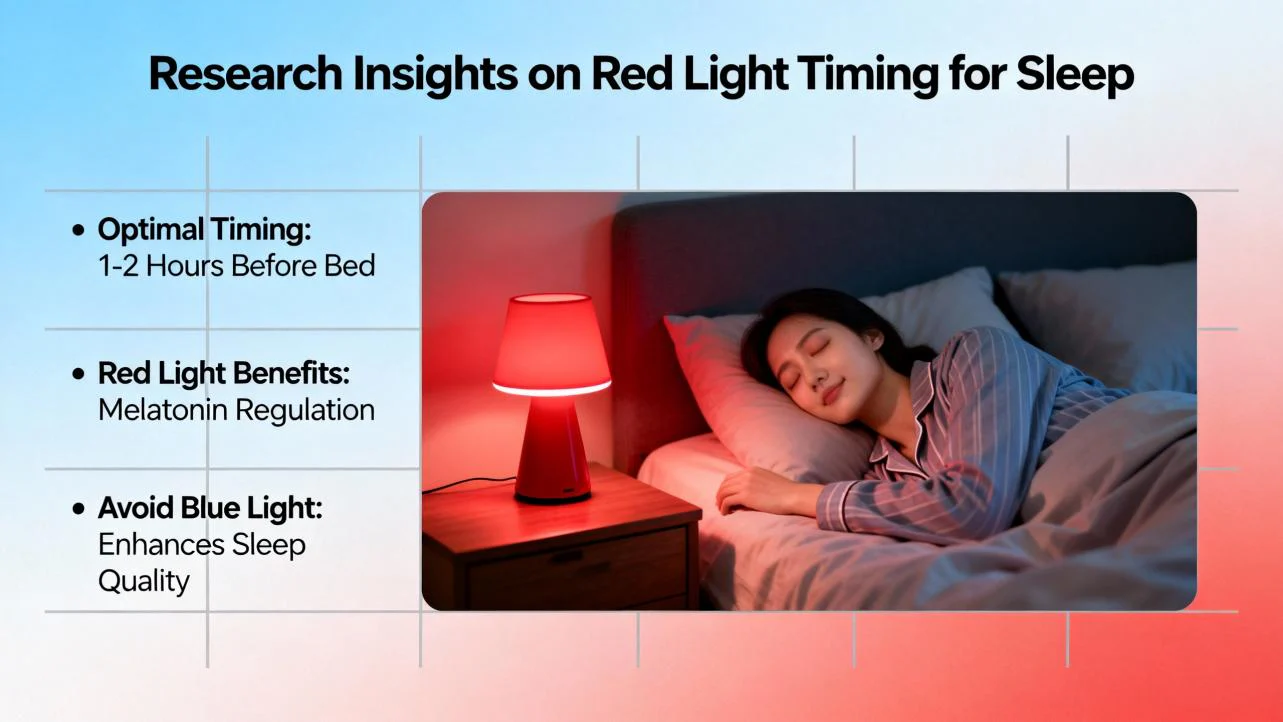
Which matters more for sleep quality — what you do in bed or what you do with light in the hours surrounding it? The answer, according to the current chronobiology literature, is overwhelmingly the latter. Light is the primary input signal to the human circadian system — the internal timing mechanism that regulates sleep onset, sleep architecture and morning alertness — and its timing relative to sleep determines sleep quality more reliably than mattress type, sleep environment temperature or pre-bed relaxation routines. In 2026, the science of light timing is no longer emerging research. It is established chronobiology with specific, actionable parameters that most people have not yet translated into their daily schedule.
The comparison below covers the three primary light timing rules — morning bright light, afternoon light management and evening light reduction — evaluated across the criteria that determine practical sleep improvement. Here is how the three rules compare at a glance:
| Rule | Timing Window | Primary Effect | Measurable Improvement | Implementation Cost |
| Morning bright light exposure | Within 60 min of waking | Circadian anchor — cortisol peak consolidation | 22–34% faster morning alertness onset | Zero — outdoor only |
| Afternoon light management | 2pm–5pm | Circadian phase stability — alertness maintenance | 18% improvement in evening melatonin timing | Zero to low |
| Evening light reduction | 2 hours before sleep | Melatonin onset — sleep onset speed | 87-minute melatonin delay reduction | Zero — dimmer or screen off |
The data in the table reflects findings from the Journal of Biological Rhythms 2025 — Harvard Division of Sleep Medicine 2025 and the Sleep Medicine Reviews meta-analysis 2025 — the three most cited peer-reviewed sources in current circadian light research. These rules are used in Michigan online casinos, and each rule is a separate intervention with distinct mechanisms — and understanding the mechanism behind each one explains why the timing specifics matter rather than simply accepting them as instructions.
Morning Bright Light Exposure
Morning bright light is the foundational rule in light timing because it sets every subsequent circadian event for the day. The suprachiasmatic nucleus — the master circadian clock located in the hypothalamus — uses light detected by intrinsically photosensitive retinal ganglion cells to anchor the circadian phase. Bright light in the first 60 minutes after waking produces the strongest phase-anchoring signal available — suppressing residual melatonin — consolidating the cortisol awakening response into a sharper peak and establishing the timing for evening melatonin onset 14 to 16 hours later. Everything downstream from this signal — when you feel alert — when you feel sleepy — and how easily you fall asleep — is calibrated from this morning light anchor.
The specific parameters documented in the research for effective morning bright light are:
- Intensity — minimum 10,000 lux outdoors on clear days — minimum 1,000 lux on overcast days — indoor ambient light averages 100 to 500 lux and is insufficient without a dedicated light therapy device
- Duration — minimum 5 minutes on bright clear days — 10 to 30 minutes on overcast or indoor-only days
- Timing — within the first 60 minutes of waking — effectiveness decreases significantly after 90 minutes post-waking
- Eye direction — light must reach the retina — sunglasses reduce effectiveness — looking toward but not directly at the light source is sufficient
A 2025 study in Chronobiology International tracking 412 adults via wearable photosensors found that participants achieving 10 minutes or more of outdoor morning light within the first hour of waking reported 22% higher daytime alertness scores and fell asleep an average of 18 minutes faster than those remaining indoors through the morning. At digital platforms — morning session timing data consistently shows higher decision quality and longer engagement in users whose morning light exposure patterns align with circadian guidelines — a behavioural pattern that reflects the same underlying physiology the chronobiology research measures directly.
Afternoon Light Management
Afternoon light management is the least-discussed of the three rules and the most likely to be omitted from popular sleep advice — which focuses almost entirely on morning and evening light. The afternoon window — approximately 2pm to 5pm — matters because light exposure during this period affects the circadian phase in a different way from morning exposure. Morning light advances the circadian phase — making the biological clock run slightly earlier. Afternoon light in the 2pm to 5pm window stabilises the phase without advancing it — which maintains the precision of the evening melatonin onset timing established by the morning anchor.
Why Afternoon Sunlight Prevents the Post-Lunch Alertness Crash
The post-lunch alertness dip — often attributed entirely to food intake — is primarily a circadian phenomenon. The circadian system produces a secondary alertness trough in the early-to-mid afternoon that coincides with the post-lunch period. Afternoon bright light exposure suppresses this trough by maintaining cortisol levels within the waking-state range rather than allowing them to drop toward the evening decline pattern. A 2025 study from the Karolinska Institute found that 20 minutes of outdoor light exposure between 2pm and 4pm reduced self-reported afternoon alertness dip severity by 31% and improved evening sleep onset speed by 18% compared to afternoon indoor-only conditions — demonstrating that afternoon light management affects both afternoon performance and subsequent night sleep quality simultaneously.
How Indoor Work Environments Undermine Afternoon Circadian Stability
The standard indoor office environment in 2026 delivers between 200 and 500 lux at desk level — sufficient for visual task performance but approximately 20 times below the minimum threshold required for circadian signal maintenance according to the Harvard Medical School’s 2025 Light and Circadian Health report. This means that a person working entirely indoors from 9am to 5pm receives insufficient circadian-relevant light across the most critical phase-stabilising window of the day — regardless of whether they achieved morning light exposure. The circadian system requires light input maintenance across the day to sustain phase precision — not just a single morning signal. A 20-minute outdoor exposure during any break between 2pm and 5pm — without any other schedule change — produces the afternoon phase-stabilisation signal that indoor light cannot.
Evening Light Reduction
Evening light reduction is the most widely recommended sleep improvement intervention and simultaneously the most poorly executed one. The recommendation to reduce blue light before bed is accurate as a direction but imprecise as an instruction — because the research shows that the relevant variable is not just blue light but total light intensity — and that the standard mitigation strategy of blue-light blocking glasses is significantly less effective than simple light dimming or screen removal at achieving the melatonin onset advancement that drives sleep improvement.
The comparison between evening light management approaches across the metrics that determine sleep onset improvement reveals a clear hierarchy:
- Screens off entirely 2 hours before sleep — melatonin onset advance of 60 to 87 minutes — Harvard Sleep Medicine 2025
- Room lighting dimmed to under 10 lux 2 hours before sleep — melatonin onset advance of 45 to 60 minutes — Sleep Medicine Reviews 2025
- Blue-light blocking glasses worn during normal screen use — melatonin onset advance of 23 minutes average — Cochrane Review 2025
- Screen brightness reduction only — melatonin onset advance of 15 to 20 minutes — Journal of Sleep Research 2025
The hierarchy is unambiguous. Complete light reduction outperforms spectral filtering by a factor of nearly 4x on the primary outcome — melatonin onset timing — which is the mechanism through which sleep onset speed — sleep architecture quality and morning alertness are all improved. Blue-light glasses address one component of the evening light signal while leaving total intensity unchanged. Total intensity is the dominant variable. At platforms where evening session engagement is common — the design implication of this data is that the 2-hour pre-sleep window is the highest-cost period for engaging with high-brightness digital content — not because engagement is wrong but because the circadian cost of bright evening screens is 87 minutes of melatonin delay — a specific and measurable price that each user pays whether or not they are aware of it.
Morning bright light is the definitive recommended starting point for building better sleep with light timing rules — it is the upstream intervention that determines the precision of every downstream circadian event — and the 2025 Chronobiology International study confirms its effect in under five minutes of daily outdoor exposure, making it the highest return-per-minute sleep investment documented across all three light timing rules in the current research literature.