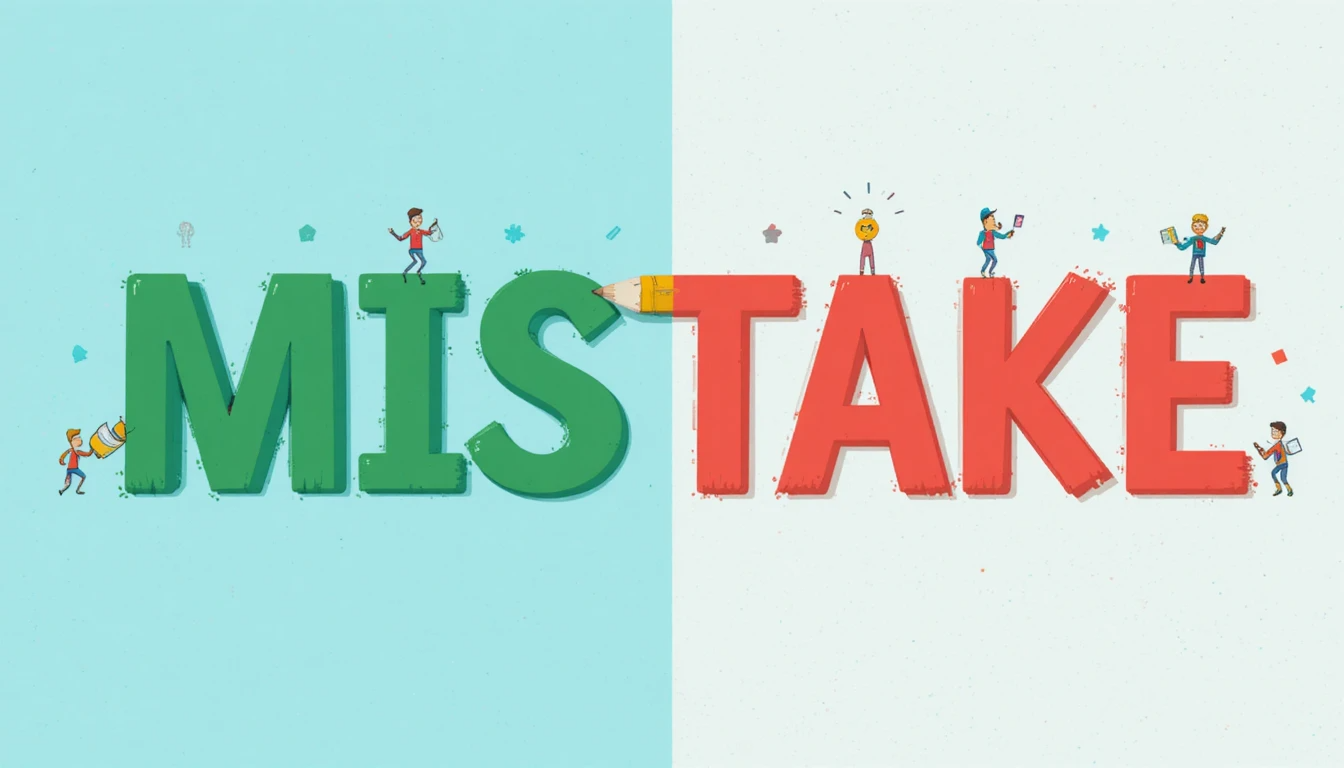
If someone asked, “How do you spell mistake?”, your instinctive response would probably be simple: M-I-S-T-A-K-E. Six letters, one word, and something we all make more often than we care to admit. But the curious phrasing of that question goes deeper than spelling itself. It invites reflection not only on how we form words but also how we understand errors, learning, and human imperfection — both in writing and in life.
Mistakes are, paradoxically, among our best teachers. Whether they appear as a typo in an email, a wrong turn on a journey, or a misstep in business, each one carries a lesson. So, in exploring how to spell “mistake,” we journey through the act of making, recognizing, and correcting errors — three essential steps that shape both our mastery of language and our personal growth.
The Literal Meaning: Spelling Mistake in English
At a surface level, spelling “mistake” is straightforward. In standard English, it’s spelled M-I-S-T-A-K-E, derived from Middle English mistaken, meaning “to misunderstand, to take wrongly.” The prefix mis- indicates “wrongly” or “incorrectly,” while take traces back to Old Norse taka, which means “to grasp or seize.” Together, they form a concept: to take something in error.
It’s striking how the word’s etymology mirrors human behavior. When we make a mistake, we’re essentially “taking” an idea, action, or decision in the wrong way — grasping without full understanding. This linguistic origin reminds us that mistakes are born from action, not inaction. You can only “mis-take” if you were brave enough to “take” something in the first place.
Mistakes in Language and Learning
Spelling mistakes, those small slips that draw red lines under our words in digital text editors, are among the most harmless errors yet they teach vital lessons. They reveal something profound about learning and growth — especially when mastering a new language or skill.
Every language learner experiences the frustration of misspelling words, mixing up homophones, or confusing grammar rules. You might type definately instead of definitely, or write your when you meant you’re. Yet, these minor missteps are milestones in progress. Cognitive psychologists note that making and correcting errors strengthens memory retention. When you spell a word wrong and then fix it, your brain creates a stronger connection to the correct form than it would through repetition alone.
Mistakes become markers of progress. The absence of errors doesn’t signify mastery — it often just means you stopped challenging yourself. In writing, art, or entrepreneurship, striving beyond the comfort zone inevitably leads to mistakes. But here’s the secret: those mistakes are proof that you’re trying.
The Emotional Side of Mistakes
The word “mistake” also carries emotional weight. It evokes embarrassment, regret, or even fear — especially in environments that punish imperfection. But spelling mistakes teach us to move past that shame. When a teacher marks your essay with corrections, it’s not an attack; it’s guidance. When software autocorrects your word, it’s helping you refine your expression.
Similarly, life’s mistakes are forms of guidance if we listen to them correctly. A failed project, a wrong business decision, or a misunderstanding with a client doesn’t define you; it refines you. The key is to treat mistakes as feedback, not failure.
Think of each error as a red underline in your life’s story — a signal pointing to what could be improved, not erased. Once we adopt this mindset, mistakes transform from obstacles into opportunities.
Why Spelling Matters More Than You Think
At first glance, spelling seems like a trivial technicality. After all, autocorrect and predictive text can fix nearly anything in seconds. Yet spelling, precise and intentional, reflects discipline, respect for communication, and attention to detail — qualities crucial in every professional setting.
When you spell words correctly, you demonstrate care for clarity. In marketing or business correspondence, a single typo can distort your message or weaken trust. Imagine sending a proposal that reads “We appreicate your interest” — a tiny slip, yet it can subtly signal carelessness. That’s why businesses value good writing: it shows professionalism and reliability.
But perfection isn’t the goal; conscientiousness is. Even seasoned professionals make occasional spelling mistakes. What separates them from novices is how they respond — by proofreading carefully, using tools, and learning from past slips.
Common Spelling Mistakes and What They Reveal
Certain words consistently trip up English speakers, native or not. These recurring errors carry hidden insights about how the language works. Here are a few:
- “Separate” vs “Seperate” — many confuse vowels due to pronunciation differences.
- “Definitely” vs “Definately” — one of the internet’s most common typos.
- “Their,” “There,” and “They’re” — show how English relies heavily on context.
- “Affect” vs “Effect” — a mistake of meaning more than spelling.
- “Occasion” vs “Ocassion” — demonstrates the challenge of double consonants.
What these reveal is that English spelling isn’t purely phonetic; it’s historical, inconsistent, and shaped by centuries of linguistic borrowing. So when someone misspells a word, it’s not just a lapse — it’s a moment of negotiation with a tricky language.
The Metaphor: Spelling “Mistake” in Life
Beyond letters, the phrase “how do you spell mistake?” invites a deeper metaphorical reading. How do we define or recognize mistakes in our daily lives? How do we “spell out” what went wrong and rewrite it into something right?
To “spell mistake” metaphorically means to identify errors with precision — to name them. Awareness is the first step toward correction. Just as we must notice when we’ve typed recieve instead of receive, we must also notice when we’ve taken a wrong path in business or relationships. Silence or denial keeps the mistake hidden; spelling it out — acknowledging it — opens the door to growth.
Entrepreneurs, for instance, often spell mistakes with bold letters during their journeys. A failed campaign, a misjudged investment, or a missed opportunity might feel painful, but each one teaches what not to do next. The best success stories are written on the pages of corrected mistakes.
Turning Mistakes Into Mastery
Every expert — writer, coder, marketer, or designer — has an archive of mistakes behind them. What makes them masters isn’t the absence of errors but the habit of learning from each one. In professional practice, creating feedback loops is essential. Review, reflect, and iterate — whether you’re refining an ad copy or improving a business process.
Here’s a practical example: imagine you wrote a blog post that misspelled a product name or got a keyword slightly wrong. Instead of deleting the post, you review its analytics, update the text, and reoptimize the content. The mistake becomes a catalyst for better SEO and clarity. That’s how growth happens — through correction, not avoidance.
Spelling Out the Human Side of Error
Ultimately, “mistake” isn’t just a word. It’s a mirror reflecting our humanity. Our ability to err — and then to recognize and correct the error — is what distinguishes intelligent beings from machines. Perfection is sterile; imperfection breeds creativity.
Imagine a world where no one ever made a spelling mistake, a miscalculation, or a misjudgment. Progress would stagnate because improvement begins where perfection ends. Misspelling a word can lead to discovering a new one; taking a wrong step in life can lead you to a better direction.
So yes, you spell “mistake” as M-I-S-T-A-K-E. But learning how to live that word — how to embrace, understand, and grow from it — is a lifelong process.